
Are You Getting Enough Sunlight?
As we move into May, longer days and brighter skies naturally draw us outdoors. You might have noticed your mood has changed compared to how you felt a few months ago (i.e- those “winter blues” or seasonal depression. Beyond it’s feel-good effect, sunlight plays a powerful and measurable role in our physical, mental, and emotional wellness.
In a world where many of us spend most of our time indoors under artificial lighting and screens, reconnecting with natural sunlight is one of the simplest, and most overlooked, wellness tools available.
So let’s talk about how it actually contributes to our health:
1. Regulates your circadian rhythm
One of the most important roles of sunlight is its influence on your circadian rhythm, the body’s internal clock that regulates sleep, energy, and hormone cycles.
Morning light exposure helps signal to your brain that it’s time to be awake and alert. This triggers a natural cascade that:
- Increases cortisol at healthy levels (supporting energy and focus)
- Suppresses melatonin (the sleep hormone) during the day
- Improves nighttime melatonin release later, supporting deeper sleep
Research shows that morning light exposure can improve sleep quality, mood, and daytime alertness, especially when it is consistent.
Having trouble sleeping? Try getting 10–20 minutes of natural light within the first hour of waking up to reset your internal clock.
2. Stimulates Vitamin D production
Sunlight is also your body’s most efficient source of vitamin D, which plays a key role in:
- Bone health and calcium absorption
- Immune system function
- Muscle strength
- Mood regulation
According to the National Institute of Health, nearly 40% of adults in the U.S. may have insufficient vitamin D levels, particularly during winter months or in individuals with limited sun exposure.
While supplementation can help when needed, moderate sun exposure remains a natural and effective way to support healthy levels.
3. Improves mental health
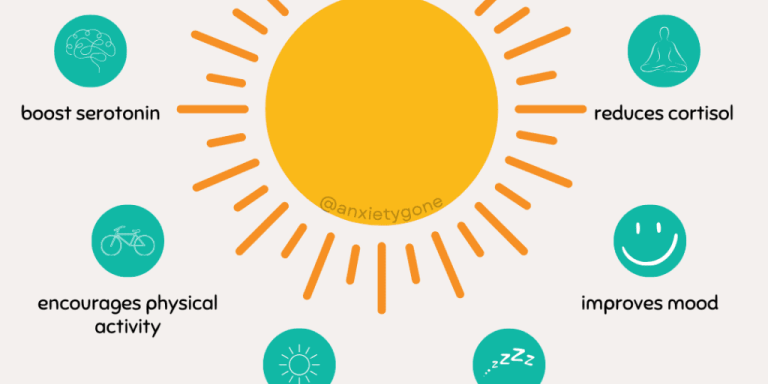
Exposure to natural light has a direct impact on brain chemistry and mood regulation. Sunlight helps stimulate the production of serotonin, a neurotransmitter associated with:
- Improved mood
- Reduced symptoms of depression
- Increased calm focus
Low light exposure, especially during darker months, is linked to conditions such as seasonal mood changes. This is one reason why light therapy is often used for seasonal affective disorder. Daylight is absolutely essential to a happier mood so the more we get improves emotional well-being.
4. Can lower stress and increase energy
Natural light also influences energy and stress levels. Studies suggest that employees working in environments with natural light report:
- Higher energy during the day
- Better sleep at night
- Lower levels of stress and eye strain
Even short breaks outside during the workday can help regulate stress hormones and improve focus. A brief walk in daylight—especially in green spaces—combines the benefits of light exposure with gentle movement, creating a powerful reset for the nervous system.
How to increase healthy sun exposure
You don’t need long periods of intense sun exposure to experience benefits. Consistency matters more than duration. Here are 3 ways to incorporate more sunlight into your routine:
1. Start your morning outside (or near a window)
Spend 10–20 minutes outside within an hour of waking up. Refrain from using sunglasses since light exposure to the eyes is key for circadian signaling.
2. Eat breakfast or drink your morning coffee near natural light
If going outside isn’t possible, sitting near a bright window still helps regulate light exposure.
Sunlight is one of the most accessible and powerful wellness tools we have. It influences sleep, mood, energy, immune function, and overall resilience—yet it requires no equipment, cost, or complexity- and it’s free!
3. Take walking meetings or short outdoor breaks
We are all used to sitting behind our computers on Zoom calls. Can you take some of your meetings outdoors? Even 5–10 minutes outside during the workday can help reset focus and energy, plus it will help you get your steps in! Win-win.
As we move into May and brighter days, consider this your invitation to reconnect with natural light—not as an afterthought, but as a foundational part of your daily wellness routine.
Sometimes, improving your health starts with something as simple as stepping outside.